
Heat Recovery
HEATEX (Sweden) specializes in energy-efficient air-to-air heat exchangers for HVAC systems: cross-flow and counter-flow plate heat exchangers, rotary heat wheels (E, EQ, ES) and their drives for heat recovery.
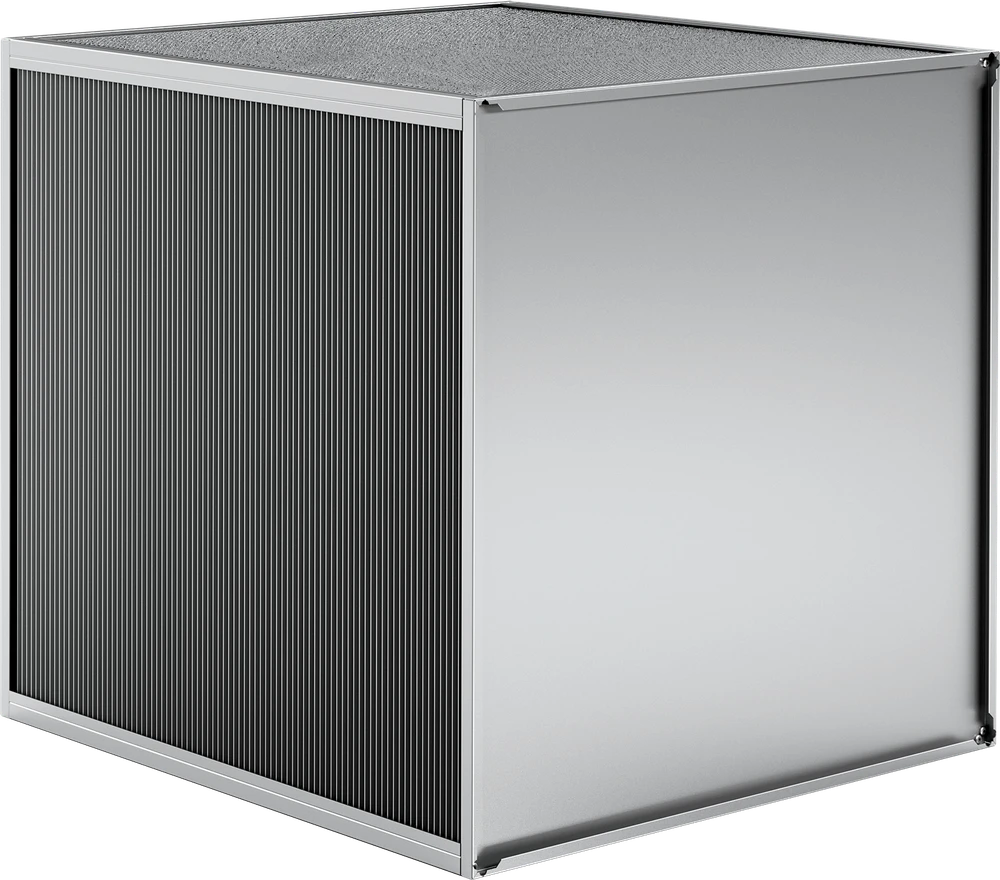 Cross-flow Heat Exchangers
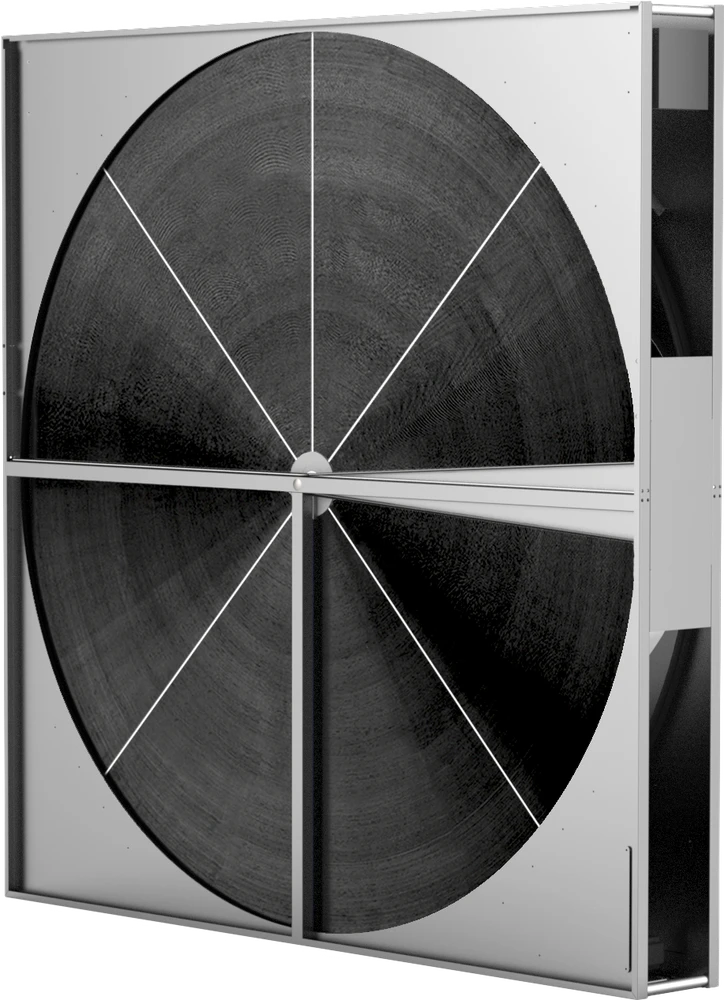 Rotary Heat Exchanger
Air-to-Air Heat Exchangers
HEATEX is a global manufacturer of air-to-air heat exchangers, founded in 1987 in southern Sweden and headquartered in Malmö, with production in Europe and China and a worldwide sales network. Its portfolio covers recuperators (cross-flow and counter-flow plate exchangers) and regenerative rotary heat exchangers (heat wheels), mainly with aluminium or coated heat-transfer surfaces.
HEATEX heat recovery solutions transfer energy between supply and exhaust air streams, reducing heating and cooling loads and improving the overall efficiency of HVAC and ventilation systems. Depending on technology and configuration they provide high thermal efficiency, low pressure loss, compact integration and humidity transfer.
Products follow the relevant standards and the HEATEX selection software is certified under the Eurovent and AHRI programmes, including performance tests at an independent laboratory. Every unit is selected for the actual airflows, temperatures, humidity and pressure-drop limits of the project.
Technical features
- High-efficiency heat recovery performance
- Optimized thermodynamic design
- Air-to-air heat transfer technology
- Energy-saving HVAC operation
- Custom-engineered solutions
- Reliable long-term performance
Applications
- HVAC Systems
- Industrial Facilities
- Hospitals & Pharmaceutical Plants
- Energy Recovery for Ventilation
- Thermal Management
- Air Handling Units (AHU)
- Commercial Buildings
- Data Centers
- Technical Cooling
- Condensation Drying
Cross-flow & Counter-flow Plate Heat Exchangers
HEATEX plate heat exchangers are fixed recuperators: supply and exhaust air pass through separate channels formed by thin aluminium plates, so there is no moving part and almost no air carry-over. Typical leakage is below 0.1 % of nominal airflow, so no leakage contribution needs to be assumed in EATR calculations for the AHU.
Plates are available in aluminium, epoxy-coated and double epoxy-coated aluminium for harsher environments, or stainless steel for heavy-duty industrial duties. The H2 and H are the main models; the same exchanger can be ordered with an epoxy coating, and either one can be supplied with bypass, dampers, AquaSeal water-tight treatment and individual air or water tightness test reports.
Options available on plate exchangers
- Bypass and dampers for freeze protection and free cooling
- AquaSeal: water-tight, higher air-tightness (plate distance > 3 mm)
- Epoxy-coated plates with lacquered cut edges
- Corrosion-protected framework (Zn-Mg end plates, powder-coated profiles)
Tests and special conditions
- Individual air tightness test and report at 400 Pa
- Individual water tightness test and report
- ATEX-oriented test protocol for aluminium exchangers
- Silicone sealing for air temperatures up to 200 / 240 °C
Recovery Wheels: Models E, EQ & ES
A rotary heat exchanger is a slowly rotating aluminium wheel that picks up energy from the exhaust air and releases it into the supply air. It gives high sensible recovery in a compact footprint with a low freezing risk, and, depending on the matrix and coating, moisture transfer for latent (enthalpy) recovery.
Model E is the one-piece rotor for small to medium air handling units. Models EQ and ES are segmented rotors delivered in sections and assembled in the AHU, ideal for extra-large airflows and for narrow plant rooms or replacements where a full wheel cannot be carried in.
Wheel Drive Systems
Every rotary heat exchanger needs a drive. HEATEX wheels can be supplied with a constant-speed AC gear motor, or with a variable-speed OJ DRHX stepper motor drive for precise, energy-efficient control of the recovery.
Unlike a geared motor, the stepper motor keeps its full torque over the whole speed range, and its software rotor guard removes the need for a separate rotation sensor. Control is by 0–10 V or by Modbus RTU / BACnet MS/TP on RS-485, and the drive supports purging, boost start-up and holding torque.